

The Ultimate Guide to Choosing the Right Wall Mural for Every Room
A wall mural doesn’t simply decorate a space — it redefines how it’s experienced.
It can stretch a room, soften it, ground it. It can introduce depth where there was none, or create a focal point that everything else quietly aligns around.
At Eazywallz, we’ve seen how the right mural transforms not just walls, but the way a space feels day to day. Choosing the right one isn’t about taste alone — it’s about scale, light, and intention.
Quick answer
Choose your wall mural based on room function, not just style: go full-wall and edge-to-edge for presence, keep bedrooms and offices low-contrast and quiet, use vinyl or pre-pasted material (not peel-and-stick) in bathrooms and other humid rooms, and always order it made-to-measure for your exact wall dimensions.
Mural Size
Most murals fail for one simple reason: they’re too small.
A mural should feel like part of the architecture — not something placed onto it. In most spaces, full wall murals create a sense of continuity that smaller formats simply can’t achieve.
- Let the mural run edge to edge whenever possible
- Avoid large empty margins that break the illusion
- Think of the wall as a canvas, not a frame
If you’re hesitating between sizes, go larger. Scale is what gives a mural presence.
Expanding a Space
Murals have a unique ability to shift how a room is perceived.
Some open a space, pulling the eye outward. Others do the opposite — enclosing, grounding, making a room feel more intimate.
To create a sense of openness:
- Look for depth — landscapes, horizons, perspective lines
- Stay within lighter tones or soft gradients
- Avoid heavy contrast across multiple walls
To create a more contained atmosphere:
- Introduce darker tones
- Use more textural or enveloping compositions
If the goal is to visually open up a room, nature and landscape wall murals tend to work especially well because they naturally create depth.

Living Rooms
This is where a mural can take up space — confidently.
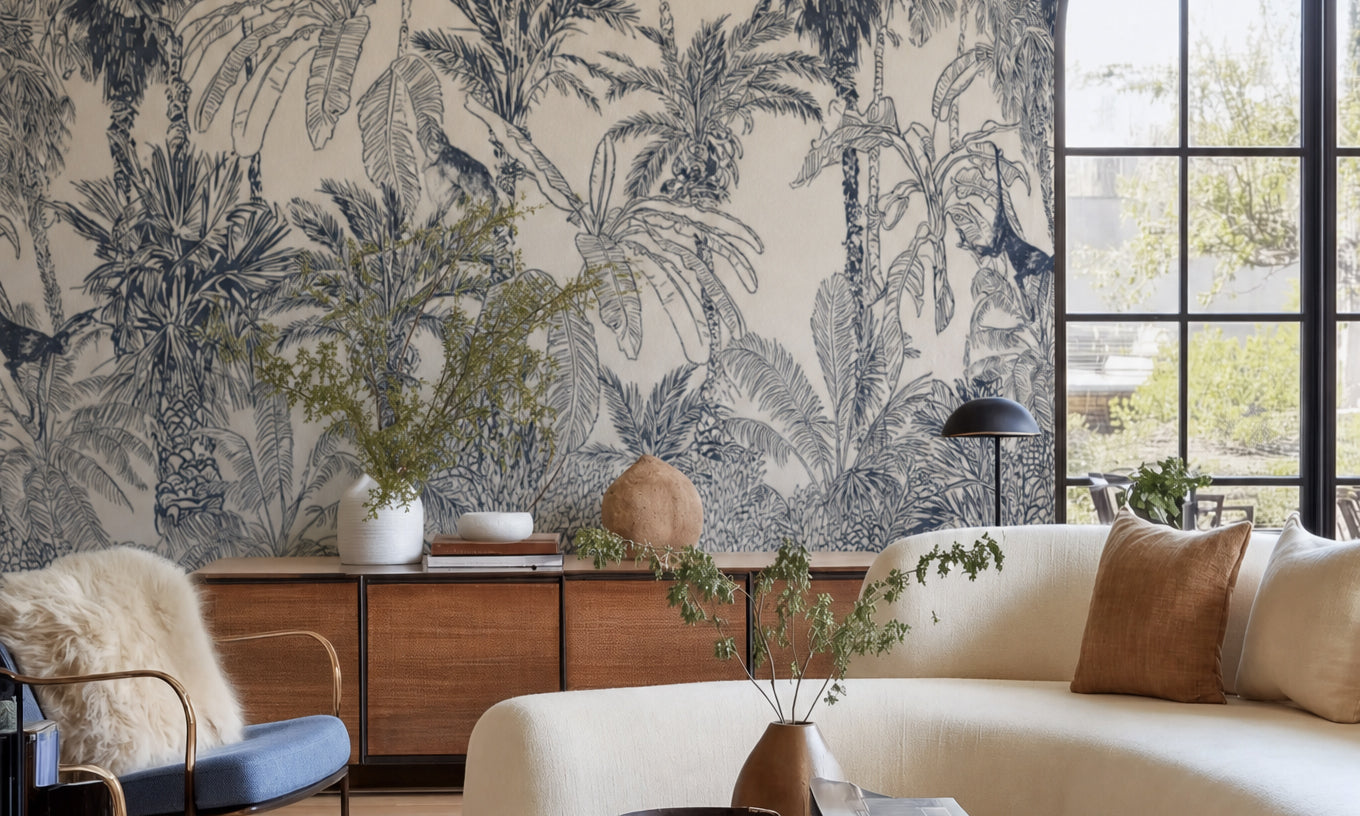
Living rooms tend to have the visual breathing room to support larger compositions. Here, a mural doesn’t overwhelm — it anchors.
What works well:
- Expansive abstracts
- Wide, atmospheric landscapes
- Subtle textures that mimic plaster or stone
Pieces from our abstract wall mural collection settle naturally behind a sofa or main seating area, while our living room wall murals are curated specifically for this kind of placement.
What to avoid:
- Competing with already busy furniture
- Choosing a composition that feels fragmented or undersized
The room should feel held together — not pulled apart.

Bedrooms
A bedroom mural should never feel loud.
It should sit quietly in the background, shaping the mood without demanding attention.
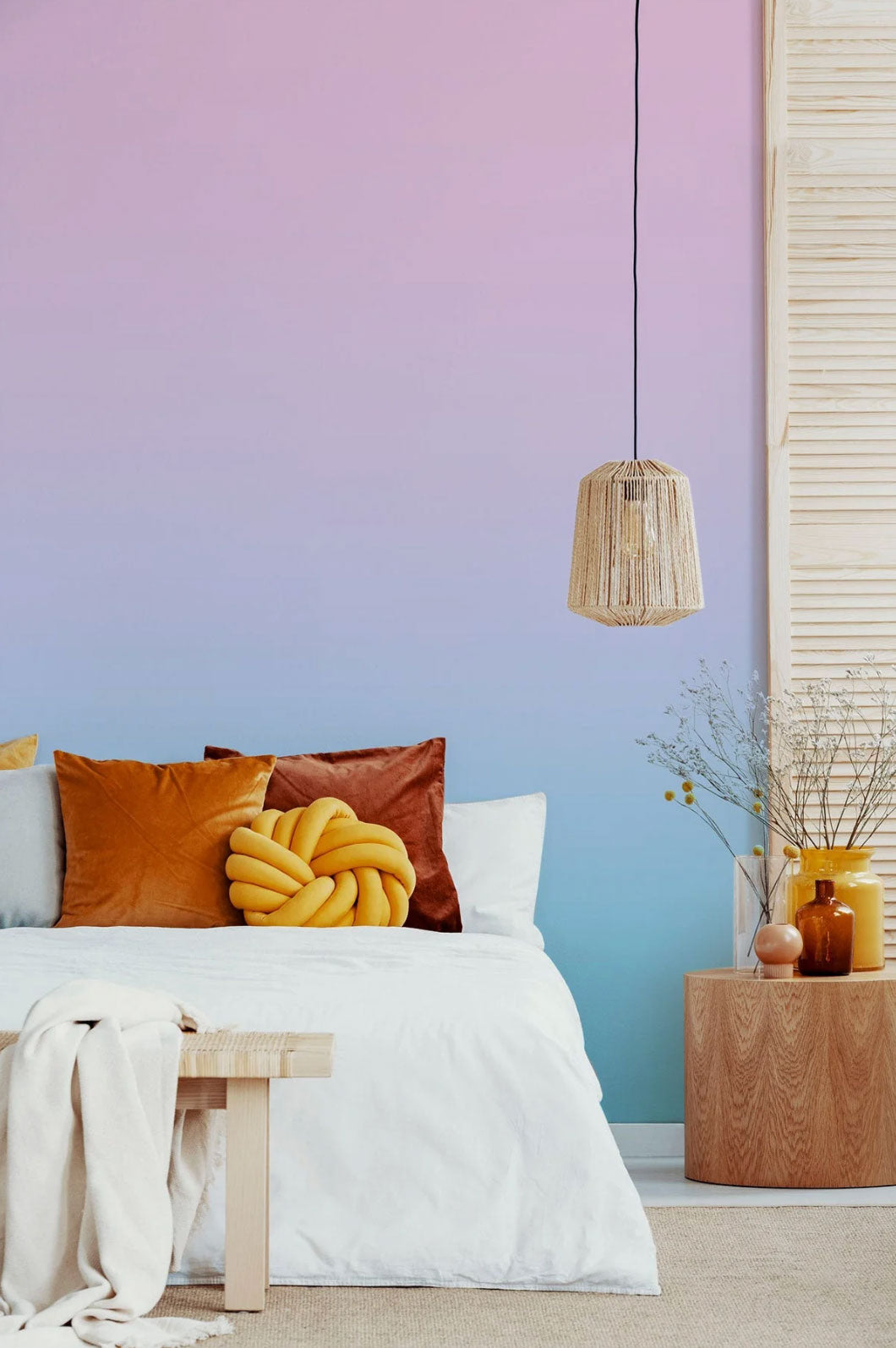
- Soft landscapes and tonal gradients
- Minimal, low-contrast compositions
- Nature-inspired scenes that feel immersive rather than detailed
Placed behind the bed, these murals create depth without interfering with rest. Designs from our bedroom wall mural collection and nature-inspired murals tend to work particularly well here.
For a quieter, more restrained look, a minimalist wall mural or even a black and white wall mural can bring calm without feeling flat.

Bathrooms
Murals in bathrooms feel unexpected — and that’s exactly why they work.
The key isn’t the design, it’s the material.
- Use vinyl or pre-pasted wallpaper in humid spaces
- Avoid standard peel-and-stick where moisture is constant
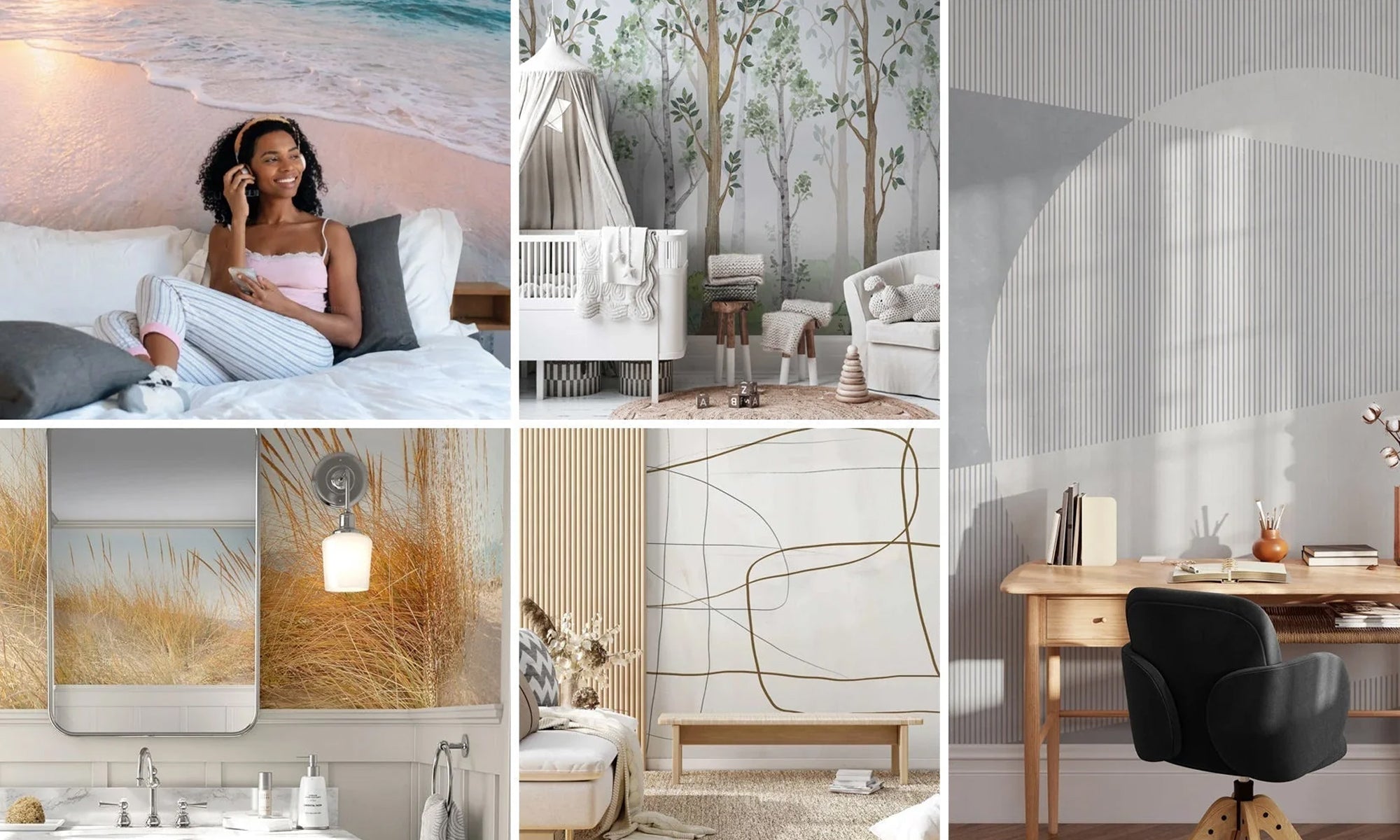
Visually, softer compositions — botanical, mineral, or spa-like textures — tend to elevate the space without overwhelming it. Our bathroom wall murals are a strong place to start.
Done right, a bathroom stops feeling purely functional and starts feeling considered.

Home Offices
A workspace should support focus before anything else.
The mural here isn’t the star — it’s the backdrop.
- Subtle textures (linen, plaster, concrete)
- Muted abstract forms
- Low-contrast landscapes
Highly detailed designs tend to distract over time. Our home office wall murals and texture wall murals are often the most effective because they add depth without pulling attention.
With Furniture
A mural doesn’t exist on its own — it lives with everything around it.
It should either soften the room or sharpen it, but never compete with it.
If your furniture is bold, let the mural step back. If your space is minimal, let it introduce contrast through a more graphic abstract mural, a minimalist composition, or a texture-driven design.
Think in layers: the mural is the foundation, not the focal conflict.

Kids’ Rooms
The mistake here is going too literal, too quickly.
Instead of overly cartoonish designs, look for something with a bit more longevity:
- Illustrative, but not childish
- Playful, but still composed
- Flexible enough to evolve over time
Our kids wall murals make this easier — playful enough for the room, but broad enough to find something that still feels designed.
Placement
Where you place a mural matters as much as what you choose.
- Behind a bed or sofa
- On the main feature wall
Avoid breaking murals across multiple walls or hiding them behind furniture. They should be experienced fully, not partially revealed.
Material Choice
Different spaces call for different materials.
Peel-and-stick:
- Ideal for flexibility
- Clean installation and removal
- Best in dry environments
Pre-pasted or vinyl:
- More permanent
- Better suited for moisture
- More durable over time
The right material protects the design — and the experience.
Mistakes to Avoid
Even strong designs can fall flat if applied incorrectly.
- Going too small
- Ignoring lighting
- Layering too many visual elements
- Forgetting how furniture interacts with the wall
- Using the wrong material for the space
It’s rarely the mural itself — it’s how it’s used.
Mural vs Wallpaper
Wallpaper repeats. A mural composes.
It creates a single, continuous image — something that feels intentional, not patterned.
That difference is what gives murals their presence.
At Eazywallz, every mural is made to measure — designed to fit your wall precisely, so the final result feels built into the space.
Frequently Asked Questions
What size should a wall mural be?
As large as the wall allows. Murals that run edge to edge read as part of the room’s architecture; small or heavily margined murals tend to look like an afterthought.
Can a wall mural make a small room look bigger?
Yes. Murals with depth — landscapes, horizons, soft gradients in lighter tones — pull the eye outward and create the illusion of more space.
What material should I use for a bathroom wall mural?
Vinyl or pre-pasted wallpaper, not standard peel-and-stick. Bathrooms and other humid spaces need a material rated for moisture.
Should a wall mural match my furniture?
It should complement it, not compete with it. Bold furniture calls for a quieter mural; a minimal room can support a more graphic one.
What’s the difference between a wall mural and wallpaper?
Wallpaper repeats a pattern across the wall; a mural is one continuous, made-to-measure image designed for a single wall.
Final Thought
A wall mural is less about decoration and more about direction.
When scale, placement, and tone align, the room doesn’t just look better — it feels complete.