



Incorporating Bold Primary Colors Into Your Room
Red, yellow, and blue are the three colors that can't be mixed from anything else — but combine to create every other color there is. Used boldly, they give a room a striking, eclectic energy that's hard to fake with anything more muted.
Quick answer
Red brings energy and warmth, blue brings calm and a sense of luxury, and yellow brings light and optimism. Use one or two primaries as the statement, keep the third muted, and pair with white or gray to keep the room feeling sophisticated rather than childish.
Red and yellow are the warm primaries — hues that feel like they advance toward you, making walls feel closer. In their truest form, primary colors are often associated with childhood, but combined thoughtfully, they create a well-composed, sophisticated space.


Primary Colors in Art and Design
Primary colors are the foundation for every other hue, with the help of black and white to add tone and value. Used together, primary colors have real visual impact, and these rich combinations show up often in modern art, pop art, and comics — think Piet Mondrian's "Composition with Red, Blue, and Yellow."

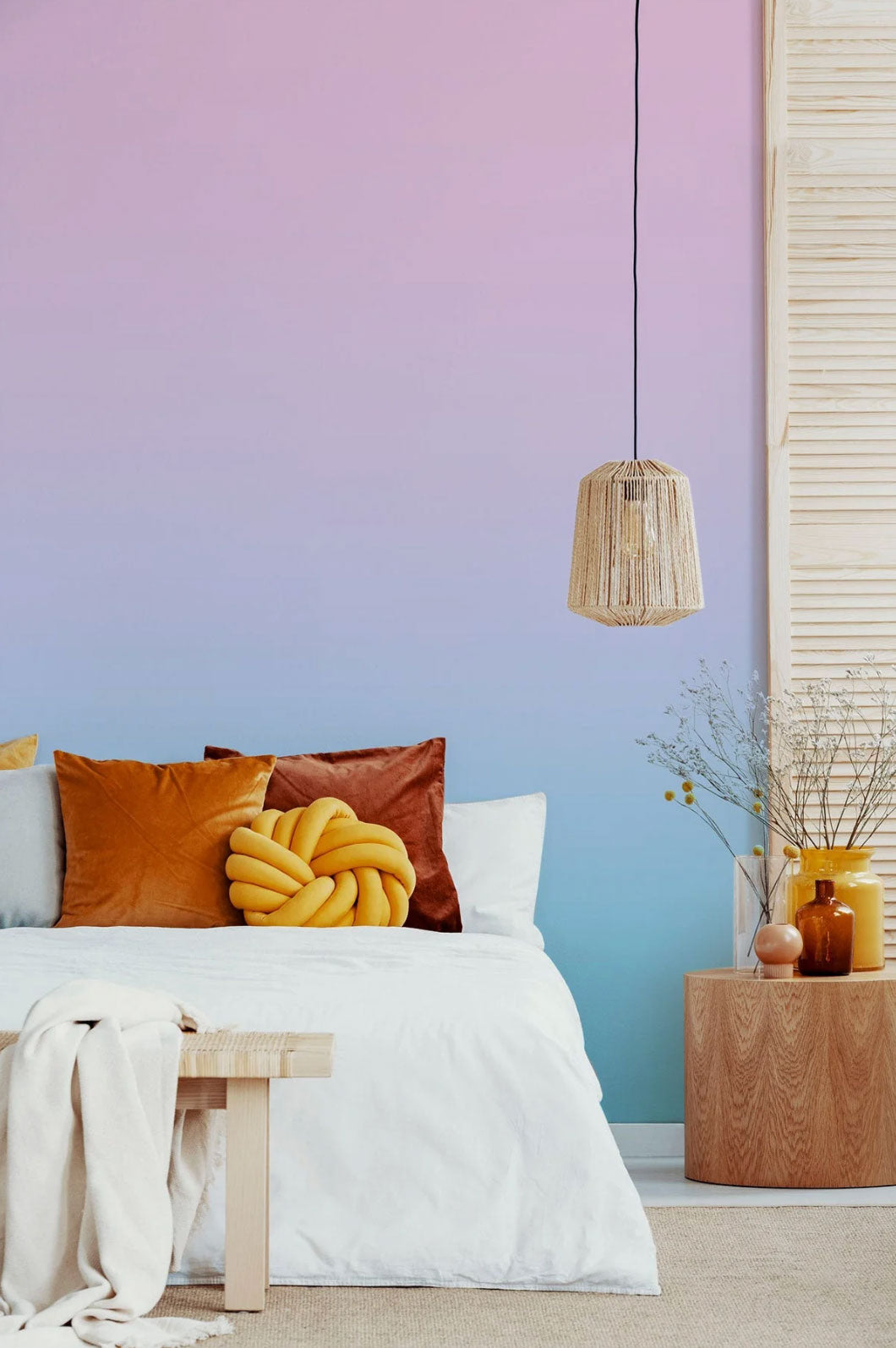
Shop Colorful Ombre & Gradient Murals
Primary Colors in Interior Design
Primaries pair beautifully with richly patterned rugs if you're feeling a little eccentric — a room-sized rug brings rich, regal color to a monochromatic living space and picks the color up throughout the room. Bright white and gray tones alongside a primary accent create a vibrant, welcoming environment without tipping into chaos.

Using the Color Wheel to Choose Your Scheme
When looking for a color pattern to follow, the color wheel is the classic tool — it separates warm and cool colors and shows how primary, secondary, and tertiary colors relate to each other.
These bold hues work as a signature statement wall, or in smaller doses through accessories if you'd rather keep the walls neutral. When bringing vibrant primaries into a room, use only one or two bright hues at a time — keep two as their pure hue, and mute the third.

Red Isn't for the Faint of Heart
Red is the color of anger, love, and passion — it heightens the senses and sets a strong mood. Red on the walls makes the room: deep reds absorb light, while brighter reds bounce it back into the space.

For a more neutral palette, pair an earthy red with wood tones to warm up a room without overwhelming it. Red drapes catch a soft glow from natural light, or a pair of bold red chairs can serve as an understated centerpiece.

Blue Gives a Sense of Luxury
Blue is one of the only colors that keeps its own character across every tone — from tranquil and calm to a touch of drama when paired with deep royal blue and gold. Blue and white together is a classic combination that never goes out of style.

A streamlined palette using black, white, and gray gives the eye a resting place. Blue evokes tranquility and calm, making it a natural choice for a bathroom or bedroom.

Say Yes to Yellow
Yellow makes a sunny, bright backdrop — a striking wallpaper that saves you the trouble of painting, with red and blue accents layered in for a dazzling, established look.

Canary yellow, with a hint of orange, offers a deeper, less primary feel while keeping the sunniness and positivity of bright yellow — sophisticated yet bold, and a natural pairing with white and gray. Yellow is one of the most reliable mood boosters in a color palette: cheerful, confident, and never quite in-your-face.

Use Yellow to Create a Focal Point
Add yellow through decorative touches — a yellow fireplace with yellow cushions in an otherwise neutral space fills the room with warmth, especially balanced with white furniture. For more contrast, pair yellow with dark, stormy blue for a bold clash of tones, or a faded lemon shade near a bay window for a soft, natural glow.

Shop Yellow Removable Wallpaper
Frequently Asked Questions
How many primary colors should I use in one room?
One or two, generally. Keep one or two as a pure, bold hue and mute the third so the room doesn't feel overstimulating.
Which primary color is best for a bedroom?
Blue tends to work best for rest and calm; red and yellow are better suited to more social spaces like a living room or dining area.
Can primary colors work in a sophisticated, adult space?
Yes — pairing a primary with white, gray, or black keeps the look elevated rather than playful, and using it as an accent rather than covering every wall helps too.
Final Thought
Whether you go bold with a full red, blue, or yellow wall, or keep it simple with small primary-color accents, this is a striking, adaptable way to bring personality into a room. Contact Eazywallz to get started.
Read more

Want to wake up in a different city every day — without the flight? A skyline mural can put New York, Paris, London, Toronto, or Chicago on your wall, turning a favorite memory or a dream destinat...

Some landscapes make your heart skip a beat before you even book the flight. A favorite place — visited or only dreamed about — can live on your wall instead of just your camera roll. A scenic or ...